
We identify issues early, test continuously across devices and environments, and validate rigorously so you can launch with confidence and maintain the excellence your users expect.
- OUR APPROACHQuality that builds reputation, not just products.
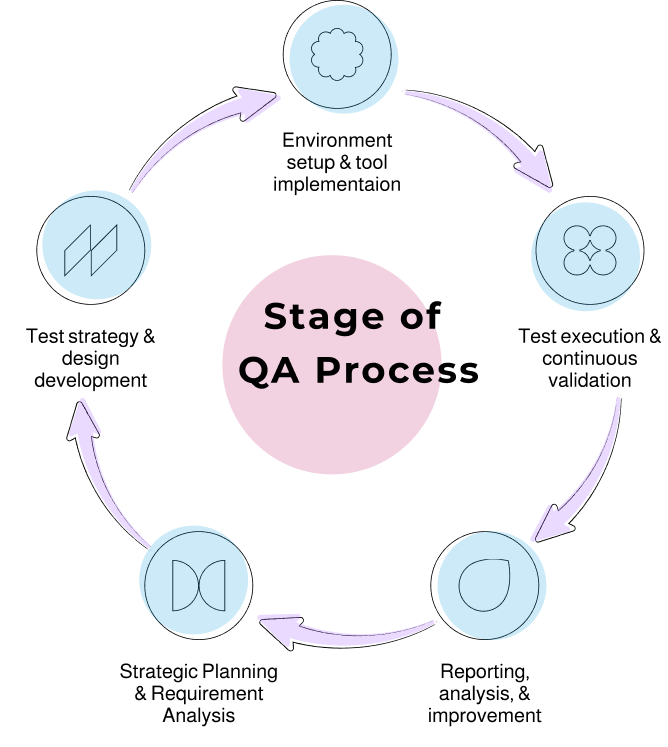
Our QA approach integrates intelligent automation and expert validation to safeguard product quality throughout the development lifecycle. By identifying issues early and continuously testing across devices and environments, we help deliver stable, secure, and high-performing releases—whether you’re introducing a new solution or evolving a mature platform.
- OUR QA SERVICES
Ensure business logic, workflows, and critical functionalities perform reliably across all platforms, delivering a consistent and predictable user experience.
Accelerate delivery and improve test coverage through scalable automation frameworks seamlessly integrated into modern CI/CD pipelines.
Safeguard existing functionality by continuously validating that new releases and updates do not introduce unexpected issues
Ensure reliable, secure, and high-performing integrations by validating APIs, data flows, and inter-service communication.
Deliver inclusive, standards-compliant applications by validating accessibility requirements and usability for all users.
- AI-DRIVEN QUALITY ASSURANCEAI-Driven Quality Assurance for Flawless Digital Experiences
At STEPS, our quality assurance is fully powered by AI. We leverage intelligent automation, predictive analytics, and risk-based testing to prevent defects before they happen and guarantee flawless digital experiences. This technology-driven approach enables faster releases, higher reliability, and measurable quality across every stage of your product lifecycle.
Intelligent QA
Powered by AI
We embed artificial intelligence directly into our QA workflows to enhance accuracy, accelerate testing cycles, and proactively prevent defects—delivering more reliable software, faster.
Smart Test
Generation
AI automatically creates and evolves test cases based on application behavior, ensuring broader coverage with less manual effort.
Proactive Defect
Prediction
Machine learning models detect patterns and flag potential issues early—before they reach production.
Faster Release
Cycles
By automating repetitive and complex testing tasks, AI significantly reduces testing time and speeds up time-to-market.
Risk-Aware Quality
Insights
AI continuously analyzes system behavior to identify high-risk areas, helping teams focus on what matters most.
Self-Healing Test
Automation
AI automatically adapts test scripts to UI and functional changes, reducing false failures and minimizing maintenance effort—so your automation stays reliable as your product evolves.
flawless digital experiences.
Discover how intelligent QA can accelerate your next release.
- QAAASQuality assurance as a service
Quality Assurance as a Service (QAaaS)is a flexible approach to software quality management where expert QA teams, processes, and tools are provided on demand as part of your delivery lifecycle. Rather than treating testing as a one-time phase, QAaaS integrates continuous quality validation throughout development—covering functional, performance, security, and usability testing. This model enables organizations to scale QA efforts as needed, accelerate release cycles, reduce risks, and maintain consistent quality standards, while allowing internal teams to stay focused on product innovation and business growth.
Assess & Align
- Understand your product, architecture, and business objectives
- Evaluate current quality practices and pain points
- Define a tailored QA strategy aligned with your delivery goals
Select the Engagement Model
- Choose the right QA setup: consulting, managed services, integrated team, or project-based support
- Define scope, responsibilities, SLAs, and cost structure
- Ensure flexibility and scalability from day one
Integrate & Execute
- Seamlessly integrate QA teams with your developers and tools
- Execute functional, automated, performance, and security testing
- Provide continuous feedback through clear reporting and collaboration
Monitor, Optimize & Scale
- Track quality metrics, risks, and release readiness
- Continuously optimize processes and test coverage
- Scale QA efforts as your product, users, and complexity grow
QA Business Impact
OPTIMIZATION
Prevent expensive rework by detecting issues early and reducing post-release fixes.
Streamlined testing processes accelerate releases without compromising quality.
Clear visibility into quality status, risks, and progress enables better decision-making.
Comprehensive testing ensures stable, dependable software across all use cases.
Quality practices designed to evolve with growing users, features, and business needs.
- CASE STUDIESOUR WORK SPEAKS FOR ITSELF
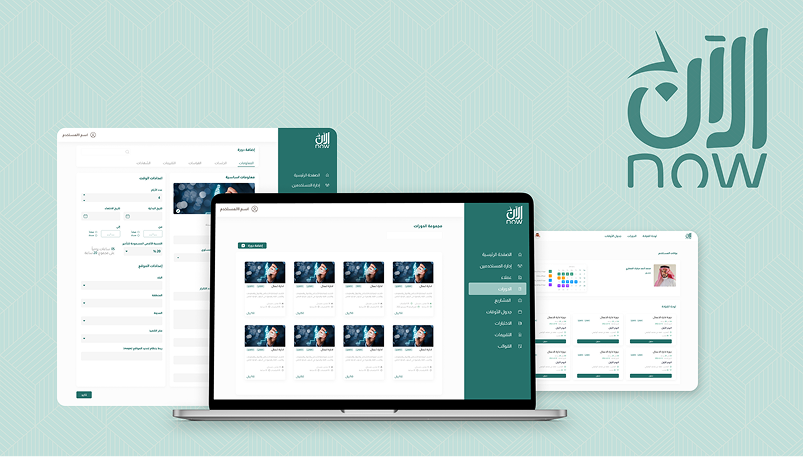
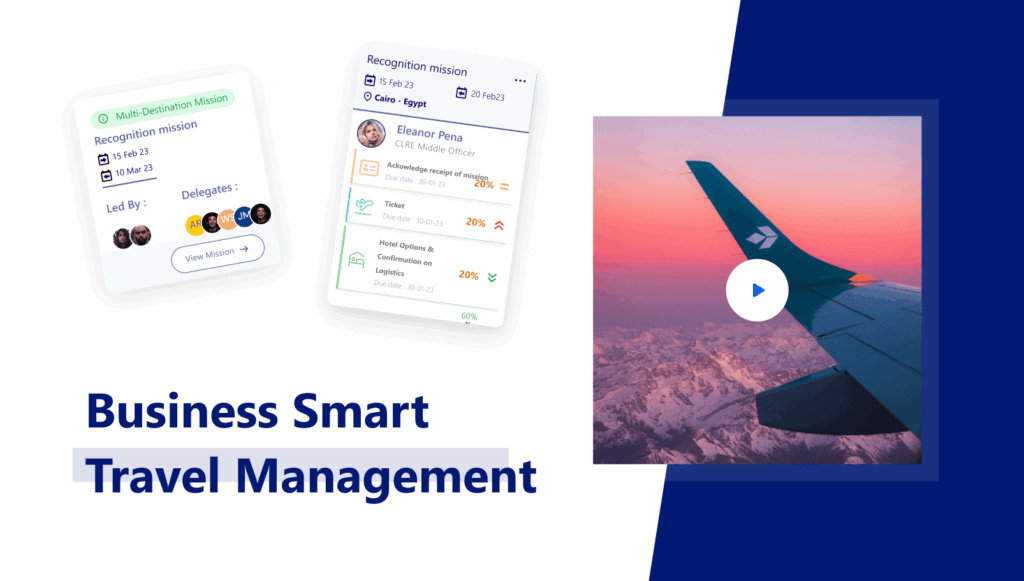
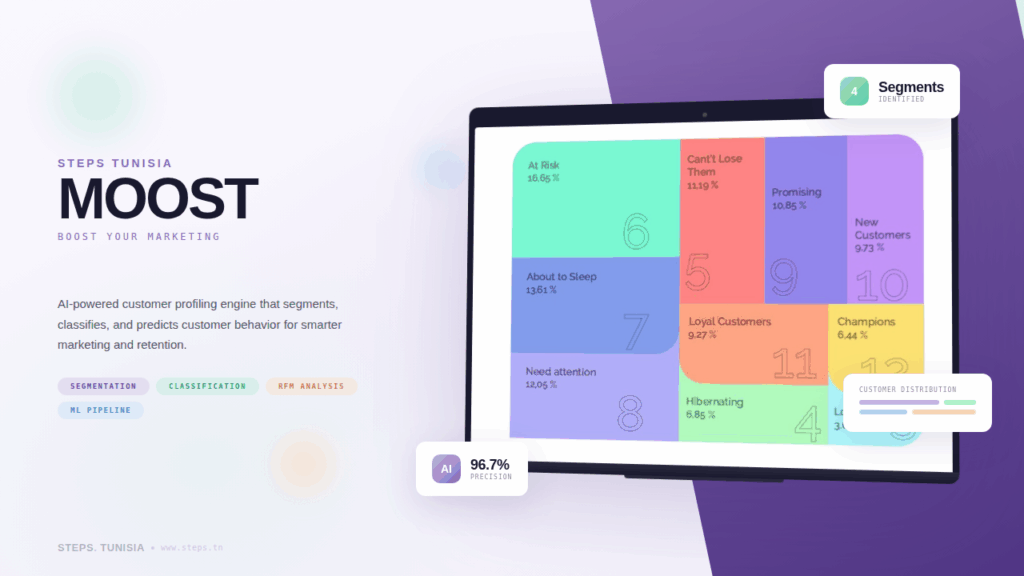
Explore our portfolio of bold and impactful projects, designed to inspire and deliver excellence.
- FAQFREQUENTLY
ASKED QUESTIONS
Both serve different purposes:
MANUAL TESTING:
– Human testers explore the application
– Best for: UX issues, edge cases, exploratory testing
– Flexible and intuitive
– Catches issues automation might miss – Required for: Visual bugs, usability problems, new features
AUTOMATED TESTING:
– Scripts run predefined test scenarios
– Best for: Regression testing, repetitive checks
– Fast and consistent
– Runs 24/7 in CI/CD pipelines – Required for: Large codebases, frequent releases, critical paths
We recommend a hybrid approach: automation for regression, manual for exploration. The optimal ratio depends on your release frequency and application complexity.
Depends on the engagement type:
PROJECT-BASED QA:
One-time testing engagement
– Typically 15-25% of development cost
– Example: €50K dev project → €7,500-12,500 QA
QA AS A SERVICE (QAaaS):
– Ongoing monthly testing
– Dedicated QA engineer: €4,000-6,000/month
– Part-time engagement: €2,000-3,500/month
AUTOMATION SETUP:
– Test framework implementation
– One-time: €10,000-30,000
– Includes training and documentation
ROI perspective: Proper QA typically returns 5-10x the investment through reduced production bugs, faster releases, and better user satisfaction.
As early as possible. Our approach:
– Requirements phase: Review for testability
– Design phase: Create test strategy
– Development phase: Write test cases, start automation
– Each sprint: Test completed features
– Pre-release: Full regression + performance testing
– Post-release: Monitoring and smoke tests
The biggest mistake companies make is treating QA as a “final phase” before launch. By then, bugs are expensive to fix. We integrate QA throughout development.
Comprehensive testing services:
FUNCTIONAL TESTING:
– Unit testing – Integration testing – System testing
– User acceptance testing (UAT)
– Regression testing
NON-FUNCTIONAL TESTING:
– Performance testing (load, stress, spike)
– Security testing (OWASP Top 10) – Accessibility testing (WCAG 2.1)
– Compatibility testing (browsers, devices)
– Usability testing
SPECIALIZED TESTING:
– API testing – Mobile app testing (iOS, Android)
– Database testing
– Localization testing
Absolutely. In fact, external QA is often more effective because:
– Fresh eyes catch issues developers overlook
– No bias toward “how it should work”
– Independent validation for stakeholders
– Objective quality assessment
We regularly test applications built by other agencies, in-house teams, or offshore developers. We just need access to the application and documentation about expected behavior.
We select tools based on your stack:
WEB APPLICATIONS:
– Cypress (our preferred for modern web apps)
– Playwright (great for cross-browser)
– Selenium (legacy systems, broad compatibility)
MOBILE APPLICATIONS:
– Appium (cross-platform)
– XCTest (iOS native)
– Espresso (Android native)
API TESTING:
– Postman/Newman
– REST Assured
– k6 (performance)
We can work with your existing tools or recommend optimal solutions based on your technology stack.
We integrate with your workflow:
– Bug tracking: JIRA, Linear, GitHub Issues, or your preferred tool
– Bug reports include: Steps to reproduce, expected vs actual, screenshots/videos, severity, environment details
– Daily/weekly status reports (your preference)
– Slack/Teams integration for real-time communication
– Dashboard access for stakeholders
We use X-Ray for JIRA for full test case management and traceability when needed.
Our track record:
– 95% defect detection rate (bugs found before production)
– <2% critical bug escape rate – Average 150+ bugs found per enterprise project
– 99.5% post-launch uptime for tested applications
Yes, we offer several levels:
BASIC SECURITY TESTING (included in QA):
– OWASP Top 10 vulnerability checks
– Input validation testing
– Authentication/authorization testing – Basic penetration testing
ADVANCED SECURITY AUDIT (separate engagement):
– Full penetration testing
– Code security review
– Compliance validation (PCI-DSS, HIPAA, GDPR)
– Third-party tool scanning (OWASP ZAP, Burp Suite) For applications handling sensitive data (financial, healthcare),
we recommend a dedicated security audit in addition to functional QA.
Typical timelines:
– QA consultation: Within 48 hours – Small project kickoff: 1 week
– QAaaS engagement start: 1-2 weeks
– Automation framework setup: 2-3 weeks
For urgent needs, we can often start within days. Contact us with your timeline requirements.
- BLOG & NewsINSIGHTS, TIPS & news
About AI and digital world

READY TO
DISRUPT YOUR BUSINESS.
Don’t wait for the future !
Build it with us now