
Your historical data already knows what’s going to happen. We build ML models that turn that knowledge into action—predicting churn, forecasting demand, detecting fraud, and automating decisions humans can’t make fast enough
- OUR APPROACHWHEN DATA IS NO LONGER ENOUGH
Why machine learning matters ?
Data tells you what happened. Machine Learning tells you what will happen next.
In competitive markets, reacting is no longer sufficient. Machine Learning enables organizations to anticipate trends, personalize experiences, automate complex decisions, and continuously improve performance—faster and more accurately than manual approaches.
When implemented correctly, ML becomes a strategic asset, not an experimental feature.
ML IS RIGHT FOR YOU IF :
- You have 6+ months of historical data
- Decisions repeat frequently (hundreds or thousands)
- Errors are costly (fraud, churn, downtime)
- You suspect patterns exist in your data
- Scale requires automation (humans can’t review all)
ML IS NOT RIGHT FOR YOU IF :
- You have no historical data to learn from
- Each decision is completely unique (no patterns)
- Stakes are low and errors don’t really matter
- It’s pure randomness (lottery numbers)
- Volume is low enough for manual review
- OUR SERVICESWHAT MACHINE LEARNING CAN DO FOR YOU
Our Machine Learning services help organizations move beyond descriptive analytics to prediction, automation, and optimization.
We design ML solutions that solve real business problems, integrate seamlessly with existing systems, and deliver measurable impact.
PREDICT
Know what it happen before it happens
- Customer churn
- Demand/sales
- Equipment failure
- Revenue
- Risk scores
DETECT
Catch problems the moment they occur
- Fraud
- Anomalies
- Quality defects
- Security threats
- Error patterns
OPTIMISE
Find the best outcome among millions
- Pricing
- Inventory
- Scheduling
- Resource alloc.
- Route planning
CLASSIFY
Sort and categorize at scale
- Lead scoring
- Customer segments
- Document types
- Risk categories
- Sentiment
AUTOMATE
Make decisions at machine speed
- Approval flows
- Routing
- Recommendations
- Personalization
- Triage
- YOUR NEEDSWHY MACHINE LEARNING MATTERS ?
ML models analyze complex patterns across large datasets, enabling faster and more reliable decisions than traditional rule-based systems.
Know which customers will leave 30 to 60 days before they do.
Predict what customers will buy, when, and how much.
Catch fraud in real-time without blocking legitimate customers.
How customers what they want before they know they want it.
Know when equipment will fail — weeks before it does.
- HOW AI CREATES VALUEINTELLIGENCE THAT CONTINUOUSLY IMPROVES
Machine Learning systems learn, adapt, and evolve over time.
More Accurate Decisions
ML models analyze complex patterns across large datasets, enabling faster and more reliable decisions than traditional rule-based systems.
ML automates decision-making at scale, allowing organizations to grow without increasing operational overhead.
Continuous Optimization
Models improve as data grows, delivering increasing value over time rather than static outcomes.
TRANSFORM DATA INTO INTELLIGENT ACTIONS.
Discuss Your ML Use Case
- tools we useA modern machine learning stack
Machine Learning works best when it’s built with clarity and intent.
We build Machine Learning solutions that are explainable, maintainable, and aligned with real business outcomes designed to create trust, adoption, and long-term value.
We’re framework-agnostic.
We use what’s right for your problem, not what’s trendy this month.
FRAMEWORKS



![image 5 [Vectorized]](https://steps.tn/wp-content/uploads/2026/02/image-5-Vectorized.svg)
CLOUD


![image 7 [Vectorized]](https://steps.tn/wp-content/uploads/2026/02/image-7-Vectorized.svg)
MLOPS


![image 9 [Vectorized]](https://steps.tn/wp-content/uploads/2026/02/image-9-Vectorized.svg)
![image 8 [Vectorized]](https://steps.tn/wp-content/uploads/2026/02/image-8-Vectorized.svg)
DEPLOYMENT


READY TO PREDICT THE FUTURE?
Your competitors are already using ML. The question isn't if you'll adopt it It's whether you'll be early or late.
- CASE STUDIESOUR WORK SPEAKS FOR ITSELF
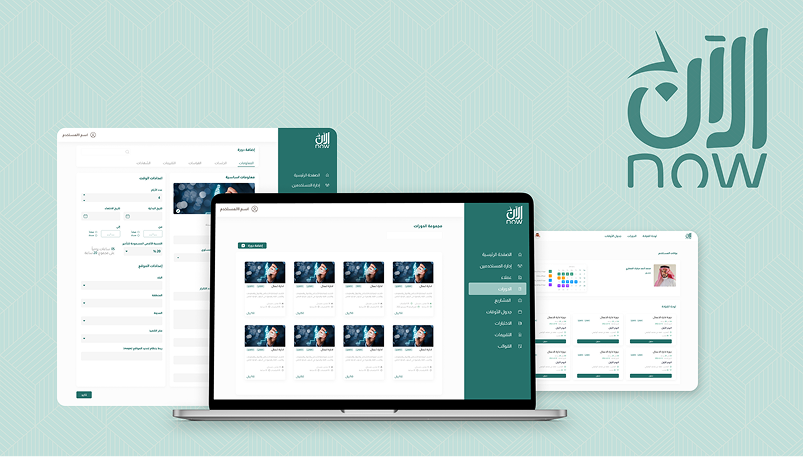
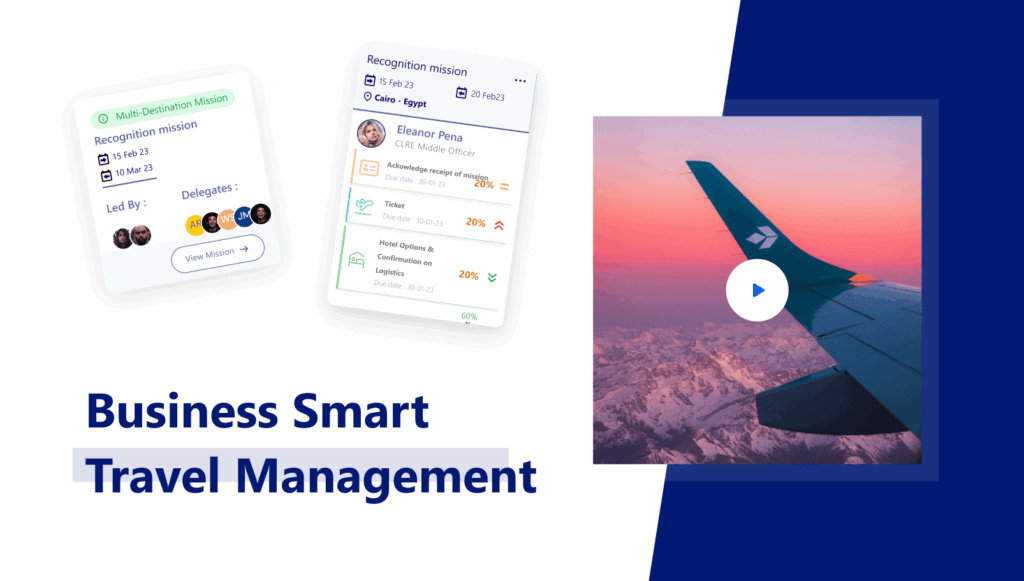
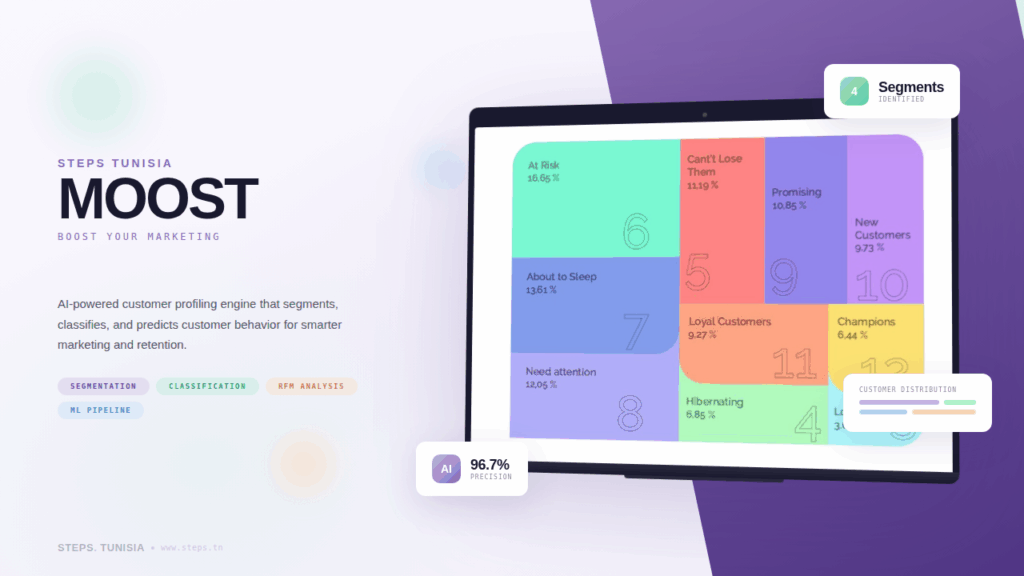
Explore our portfolio of bold and impactful projects, designed to inspire and deliver excellence.
- FAQFREQUENTLY
ASKED QUESTIONS
It depends on the complexity, but here are general guidelines:
For simple classification (lead scoring, basic churn): 5,000 to 10,000 records minimum, 50,000+ ideal.
For complex patterns (fraud detection, demand forecasting): 50,000 to 100,000 records minimum, 500,000+ ideal.
For deep learning: 100,000+ minimum, millions ideal.
More important than quantity is quality. 10,000 clean, relevant records beats 1 million noisy ones. During our Discovery phase, we assess your data and tell you honestly if you have enough.
What’s the difference between ML and traditional analytics?
Traditional analytics answers: What happened? Why did it happen?
Machine learning answers: What will happen? What should we do?
Traditional analytics looks backward. It tells you that sales dropped 15% last quarter and helps you understand why.
Machine learning looks forward. It tells you which customers will churn next month, which products will sell out, which transactions are fraudulent.
Both are valuable. Most companies need both. We often start with analytics (dashboards) and add ML when the foundation is solid.
Discovery phase: 1-2 weeks. You’ll know if ML is feasible for your use case.
POC with accuracy metrics: 4-6 weeks. You’ll see real numbers on your real data.
Production deployment: 10-16 weeks total from start.
ROI realization: Typically 2-6 months after deployment, depending on use case.
The POC phase is designed to prove value quickly. If it doesn’t hit accuracy targets, you don’t proceed to production.
No. We design for low-maintenance operation.
What’s automated: Model retraining on schedule, data drift monitoring, performance alerts, basic issue detection.
What you need: Someone to review alerts (can be a business user), domain experts to validate edge cases, IT support for infrastructure (or we can host it).
Optional: Our MLOps retainer handles all ongoing maintenance if you don’t want to manage it internally. Most clients without data science teams choose this option.
ML models can degrade as patterns change. We address this with:
Monitoring: We track prediction accuracy continuously, detect data drift (when input patterns change), and alert you when performance drops below thresholds.
Retraining: Models are retrained on schedule (weekly, monthly) or triggered when drift is detected. New models are tested before replacing old ones.
Human oversight: Regular performance reviews, feedback loops from end users, and quarterly model audits.
This is all included in our MLOps retainer, or we train your team to do it.
Yes. We design for integration, not replacement.
Common integration patterns: REST API (your app calls our model), batch scoring (we score data on schedule), CRM integration (predictions in Salesforce, HubSpot), ERP integration (forecasts in SAP, Oracle), webhooks (trigger actions based on predictions).
We’ve integrated with virtually every major system. If it has an API or database access, we can connect to it.
We define ROI metrics during Discovery, before building anything.
For churn prediction: Revenue retained minus project cost. If we reduce churn from 18% to 12% on a €10M customer base, that’s €600K saved annually.
For fraud detection: Fraud prevented minus project cost plus false positive reduction value.
For demand forecasting: Inventory cost savings (reduced stockouts plus reduced overstock).
For recommendations: Incremental revenue attributed to recommendations minus project cost.
We build ROI tracking into every deployment so you can see value continuously, not just at the en
We’ve deployed ML models across:
Financial services: Fraud detection, credit scoring, churn prediction, customer segmentation, AML monitoring.
Retail and e-commerce: Demand forecasting, recommendation engines, price optimization, customer lifetime value.
Telecommunications: Churn prediction, network optimization, customer segmentation.
Manufacturing: Predictive maintenance, quality prediction, demand forecasting, supply chain optimization.
Healthcare: Patient risk stratification, readmission prediction, resource optimization.
Energy and utilities: Consumption forecasting, anomaly detection, predictive maintenance.
The algorithms are similar across industries. What changes is domain knowledge and feature engineering. We bring both.
- BLOG & NewsINSIGHTS, TIPS & news
About AI and digital world

READY TO
DISRUPT YOUR BUSINESS.
Don’t wait for the future !
Build it with us now